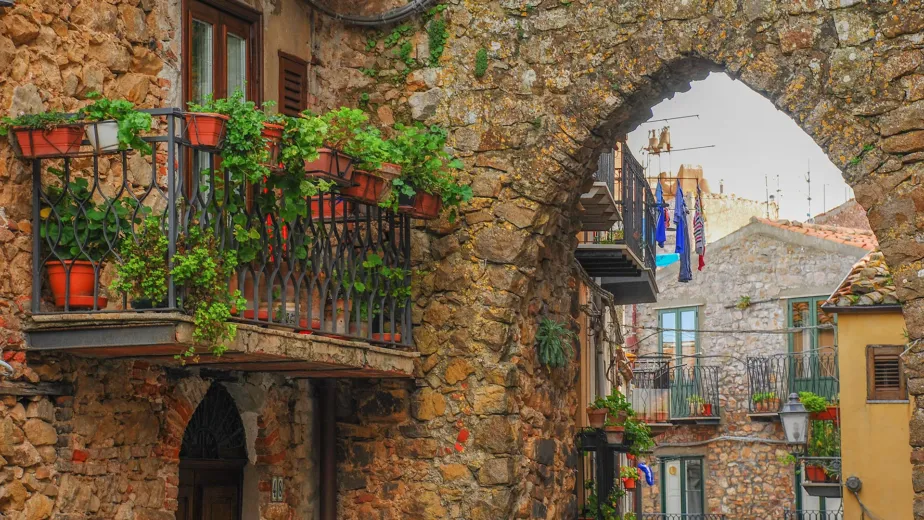


Castelbuono is a medieval village located about 90 km from Palermo, at the foot of Mount Milocco and within the Madonie Natural Park. It is one of the most representative historic centres of inland Sicily, with a strong identity shaped by the Ventimiglia family and the development of its castle.
The origins of the village date back to the Middle Ages, when in 1316 Francesco I Ventimiglia ordered the construction of the castle over an earlier settlement. Over time, a town gradually developed around this structure, which became the residence of the Ventimiglia family and later a cultural hub enriched by artists and craftsmen who contributed to its historical and artistic heritage.
The heart of the village is the Ventimiglia Castle, built on layers of Byzantine and Arab-Norman structures. The building, arranged across multiple levels and towers, preserves spaces of great historical value, including the richly decorated Chapel of Saint Anne, closely linked to the tradition of the relic of Saint Anne’s Holy Skull.
Next to the castle stands the Church of Maria Santissima Assunta, also known as the Old Mother Church, built in the 14th century and modified over the following centuries through various extensions and architectural interventions. Another important religious landmark is the Church of the Nativity of the Blessed Virgin Mary, built between the 16th and 17th centuries.
The village’s cultural heritage is completed by the Civic Museum of Castelbuono, which collects artworks and historical testimonies linked to local history and the cult of Saint Anne, and by the Francesco Minà Palumbo Naturalistic Museum, dedicated to biodiversity and the natural studies of the Madonie area.
Castelbuono is also known for its gastronomic tradition, deeply rooted in the Mediterranean diet. Ingredients such as olive oil, citrus fruits, almonds, pistachios, and raisins define a simple yet distinctive cuisine, expressing the authentic identity of the territory and its history.